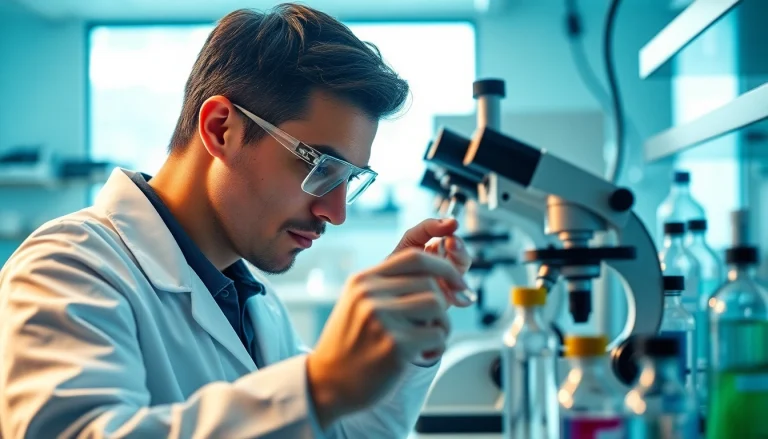
Introduction to Peptide Research
Peptides have emerged as a vital focus within the realm of biochemistry and pharmacology, drawing interest for their therapeutic potential and wide range of applications. Their significance in drug discovery and the treatment of various ailments makes understanding the foundational elements of peptide research crucial for scientists and researchers. This article delves into the essentials of peptide formulation, specifically emphasizing the role of solvents and bacteriostatic water, a key component in peptide research. For a comprehensive experience in peptide formulation, many researchers rely on bac water to create a sterile environment necessary for studies.
What are Research Peptides?
Research peptides are short chains of amino acids linked by peptide bonds. They are synthesized to study a multitude of biological and chemical processes. Each peptide can have unique properties, making them suitable for various applications, including therapeutic use, diagnostics, and as research tools in molecular biology. Their ability to mimic natural hormones and proteins allows them to modulate bodily functions, making them crucial for developing novel treatments.
Importance of Solvents in Peptide Studies
Solvents play an indispensable role in peptide research, particularly in the dissolution process and the overall stability of the compounds in question. They facilitate the mixing of peptides with other compounds during synthesis and help in achieving desired concentrations needed for experimentation. The choice of solvent can significantly impact the solubility, stability, and bioactivity of the peptides, highlighting the need for careful selection based on the specific requirements of the research.
Overview of Peptide Synthesis Processes
Peptide synthesis typically involves two primary methodologies: solid-phase synthesis (SPS) and liquid-phase synthesis (LPS). Solid-phase synthesis offers advantages in purification and reaction efficiency by tethering the peptide chain to a solid resin during synthesis. In contrast, liquid-phase synthesis is often utilized for shorter peptides or large quantities, allowing for better handling of soluble reagents. Understanding these processes aids researchers in optimizing peptide production and achieving high purity levels consistent with experimental needs.
Key Components in Peptide Formulation
Understanding Bacteriostatic Water
Bacteriostatic water is sterile water that contains a bacteriostatic agent, usually benzyl alcohol, which acts to prevent the growth of bacteria. This characteristic is essential when preparing solutions for peptide research, as sterility is crucial in preserving the integrity and effectiveness of sensitive compounds. Its use in diluting or dissolving peptides ensures that researchers maintain a contamination-free environment, crucial for obtaining valid data.
Common Solvents Used in Peptide Applications
Alongside bacteriostatic water, other solvents such as dimethyl sulfoxide (DMSO), acetonitrile, and acetic acid play significant roles in peptide applications. DMSO is particularly valued for its ability to dissolve both polar and non-polar compounds, thus offering flexibility in formulation. Acetonitrile provides a less polar environment, which is beneficial during chromatographic separation or purification processes, while acetic acid can assist in the stabilization of certain peptide formulations.
Maintaining Solvent Integrity
Maintaining the purity and integrity of solvents is essential in peptide research. Contamination or degradation can lead to unreliable results and interfere with the effectiveness of the peptides. Guidelines for ensuring solvent integrity include proper storage, using sterile equipment, and regularly checking for any visible signs of contamination, such as changes in color or clarity.
Handling and Storage of Bacteriostatic Water
Best Practices for Storage
To optimize the quality and extend the shelf life of bacteriostatic water, adhere to these best practices: store it in a cool, dark location; ensure it is tightly sealed to avoid contamination; and use it within a specified timeframe after opening. Always check for any particulate matter or cloudiness before use, as these can indicate contamination.
Signs of Contamination
Identifying contamination in bacteriostatic water is crucial for maintaining experimental integrity. Signs of contamination include visible particulate matter, discoloration, or cloudiness. If any of these symptoms are present, the solution should not be used; instead, it should be disposed of properly, and a new vial should be obtained to ensure a sterile environment in peptide applications.
Preparing for Peptide Dissolution
When preparing to dissolve peptides, it is important to use the appropriate solvent and ensure that conditions such as temperature and pH are optimized for the particular peptide in question. A well-designed dissolution protocol will enhance the solubility of the peptide and maximize its bioactivity, ensuring reliable experimental outcomes. Following the solvent's guidelines for preparation, including potential heating and stirring specifications, can improve the overall efficiency of this process.
Overcoming Common Challenges in Peptide Research
Managing Solubility Issues
Solubility remains one of the most formidable challenges in peptide research. Peptides can exhibit limited solubility in aqueous solutions, which may hinder their efficacy in biological contexts. To address this, researchers often explore alternative solvents or modify the peptide structure to enhance solubility. Techniques such as pH adjustment or the use of solubilizers can also be employed to improve the dissolution of challenging peptide formulations.
Preventing Degradation of Solvents
The stability of solvents is critical in ensuring the success of peptide studies. Exposure to light, heat, and air can lead to solvent degradation, negatively impacting their effectiveness. To mitigate this risk, solvents should be stored in opaque, airtight containers, and handled under controlled laboratory conditions to reduce exposure to detrimental elements.
Strategies for Accurate Dosage
Accurate dosing is critical in peptide research, as variations can dramatically alter the results of experimental outcomes. Strategies to ensure accurate dosage include using calibrated pipettes for liquid measurement, relying on analytical balances for solid weights, and performing thorough calibrations with standard solutions. Regular training and adherence to strict protocols can further enhance dosing accuracy, thereby improving experimental reproducibility.
Future Trends and Innovations in Peptide Research
Emerging Technologies in Peptide Applications
As technology advances, the potential applications of peptides continue to expand. Innovations such as automated peptide synthesis and advanced analytical techniques, such as mass spectrometry, have revolutionized research methodologies, allowing for more efficient and accurate peptide production. Additionally, the incorporation of machine learning into peptide identification and optimization is paving the way for novel applications in drug discovery.
Regulatory Considerations for Solvent Use
With the increasing focus on biological and pharmaceutical applications, understanding the regulatory landscape surrounding solvent use is paramount. Researchers must stay informed about the implications of regulations pertaining to solvent safety, environmental impact, and ethical considerations in scientific research. Compliance with local and international regulatory standards is essential for facilitating research while protecting public health and the environment.
Collaborative Efforts in Peptide Research
The future of peptide research relies heavily on collaborative efforts across disciplines. Partnerships between academic institutions, government entities, and private industry can enhance resource sharing and accelerate innovation. Collaborative research initiatives facilitate access to specialized equipment, expertise, and funding, fostering a more dynamic and productive research environment.
FAQs
What is bacteriostatic water used for?
Bacteriostatic water is commonly used for diluting or dissolving peptides and pharmaceuticals, ensuring sterile conditions during preparation.
How do I store bacteriostatic water?
Store it in a cool, dark place and ensure it's tightly sealed to prevent contamination and degradation.
Can bacteriostatic water be reused?
No, once a vial is opened, it's advised to use it within a certain timeframe to maintain sterility and effectiveness.
Why is solubility important in peptide research?
Solubility affects the activity and delivery of peptides; managing it ensures the desired efficacy in applications.
What are the signs of contamination in bacteriostatic water?
Look for discoloration, cloudiness, or particulate matter as indicators of potential contamination.